Your senior engineers shouldn't spend half their week reviewing code
Heedvane gives every pull request a full first-pass review before a human opens it, whether your team or an agent wrote the code. It flags bugs, security holes, missing standards, and architecture drift, each with evidence and a suggested fix.
Your developers keep moving. Your senior engineers get their week back.
Your first scan is on us when access opens.
- Built for GDPR and the EU AI Act
- EU data residency
- Your data stays private

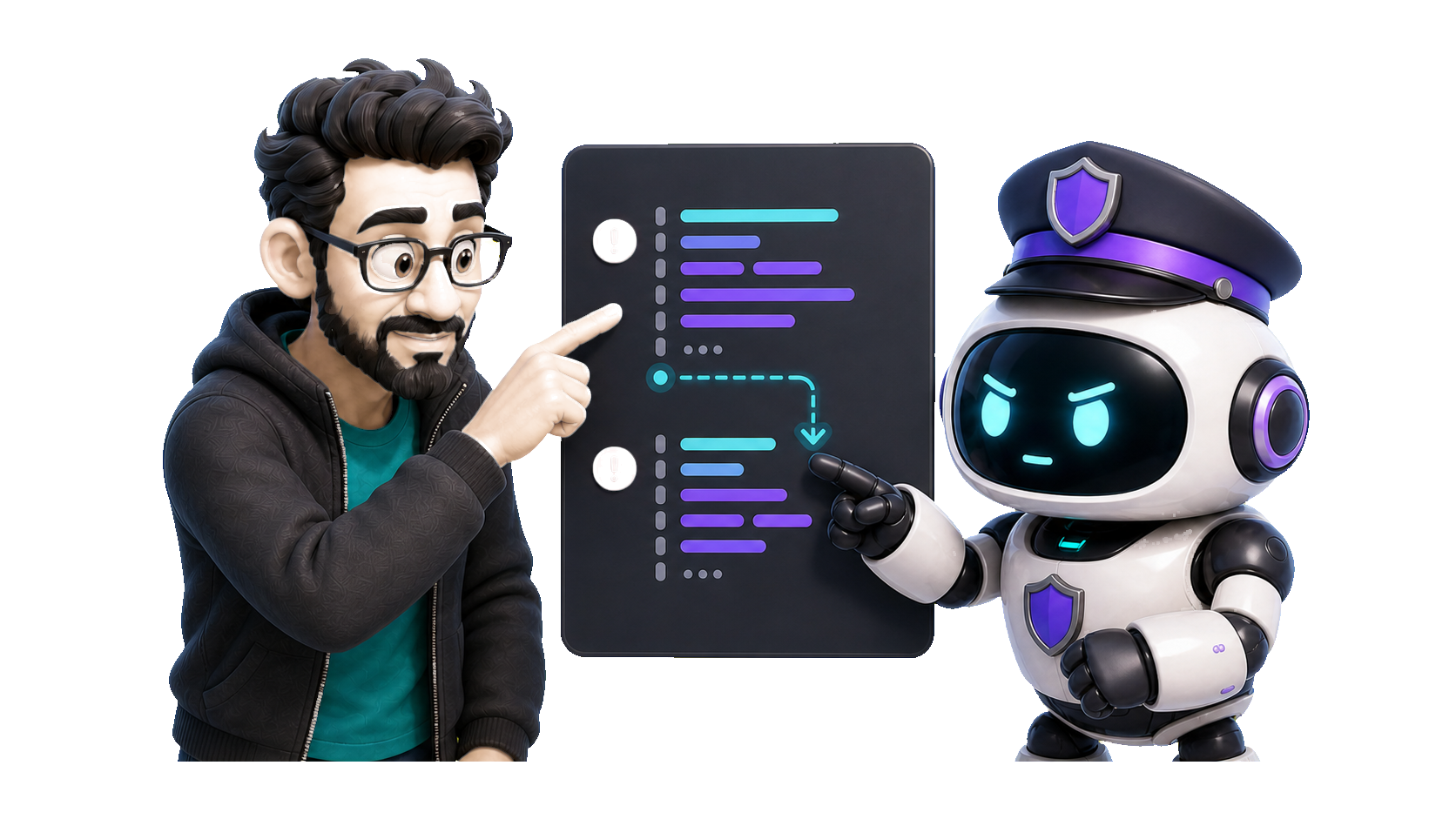
getUser() returns null for deactivated accounts, so reading .email can throw. A path like this caused an incident in January. Guard before you use it.
You already handle this correctly in orders.ts:88.
Among the first teams building with Heedvane



Software teams are already using Heedvane on real products
The first customers are using Heedvane where review quality has to hold up in production.
The code reviews take our AI-powered software solution to the next level: they make it noticeably more stable and secure. This helps us maintain consistently high quality and offer our customers an ERP system they can truly rely on.
 Dominik WildManaging Director, PARITY Software GmbHTranslated from German
Code is getting cheaper to write, and harder to keep up with
Agents now write a real share of every diff. Output per developer jumped, but review and the understanding behind it did not. So more code routes through the same few reviewers. And more of it lands that no one fully remembers writing.
That is two debts at once: the corners you cut, and the understanding that never caught up. It is already real on agentic teams. And it gets worse as agents write more of the code.
The hidden cost of code review
Most teams don't have a code quality problem. They have a senior-engineer bandwidth problem. And agents now write more of the code every week. So even more of it routes through the same few reviewers.
Every day, your most experienced engineers spend too many hours:
- Repeating the same comments
- Checking for obvious mistakes
- Enforcing coding standards
- Hunting for the same security issues
- Explaining the same patterns again and again
That is the Review Grind. It's a performance killer. None of it needs their judgment, but all of it needs their time.
But it never shows up on a budget line. It comes out of the roadmap:
- Cycle time creeps as pull requests wait for the same few reviewers
- Developers lose momentum every time they stall waiting for feedback
- Your best people spend the week guarding a quality gate instead of designing systems
So releases get delayed, pull requests pile up, and your best engineer burns out reviewing code.
Which leaves you two ways to respond.
Hire yet again another senior engineer
A senior hire takes months and a six-figure salary. But still, the review queue keeps growing while you wait. This only masks the problem instead of truly solving it.
Or automate the first pass
Heedvane reviews every pull request the moment it opens. So your seniors step in only where judgment matters. You're now solving the core problem for good.
What is the Review Grind costing your team?
On a team of ten, first-pass review can quietly eat one to two senior days a week. As a rough estimate, that is a full-time senior engineer you are not building with.
Find out how much this bottleneck costs you.
See your whole codebase, not just the next diff
Most tools wait for a pull request. Heedvane starts with a full scan of your whole repository. You see what is already there before you change a thing.
Across every file
An agent reads the entire codebase, not one file at a time. You get the picture a new senior would take weeks to build.
Prioritized, with evidence
Findings are deduplicated and ranked, each with the failing path and the reasoning. No wall of low-signal alerts to triage.
A report you can share
Export the results as a report your team can act on. It sets a baseline every later scan measures against.
Your first scan is on us when access opens, and nothing changes for your developers.
Heedvane reviews code before your team does
Open a pull request and the review is already underway. Whether your team wrote the code or an agent did. Every change is checked across 13 lenses, from architecture to security to tests. Here are six.
Architecture
Boundaries, layering, and dependency direction. It catches the change that erodes a layer or sidesteps a decision you made.
Security
Injection, secret exposure, and weak crypto. The quiet holes that reach production and surface as an incident later.
Bug hunting
Dropped guards, off-by-one errors, and truthiness traps. The correctness defects that slip through when the team is moving fast.
Code quality
Complexity, duplication, dead code, and weak names. The debt that looks harmless in one diff and slows the whole team down.
Domain logic
Implicit product rules and permissions. That's the context a static scanner can't infer, checked against your codebase memory.
Performance
Hot paths, N+1 queries, and unbounded allocation. The slow code that ships green and only shows up once real traffic arrives.

A finding helps nobody while it sits in a backlog
Every finding arrives ready to close. You choose how much to hand off. From fixing it yourself to letting Heedvane open the pull request.

- 01
Fix it yourself
Concrete fix steps and the evidence behind every finding. It provides the failing path and the reasoning spelled out. No digging through the codebase, and nothing to reverse-engineer before you start.
- 02
Hand it to your agent
Export any finding as a ready-to-run prompt. It works with Claude Code, Cursor, Codex, or whatever agent your team uses. It even attaches the full context. Let the agent do the typing. Particularly useful for agentic engineering and vibe coders.
- 03
Let Heedvane open the PR
Heedvane writes the fix and opens a pull request your team reviews and merges like any other. It even provides a clear summary of what changed and why. One click, and it's fully reversible.
Developers get feedback right away. Senior engineers look only at the decisions that need a human. Nothing merges without your team's review.
Your agents and your team work from the same findings
Heedvane is not only for humans. Every finding is open to the coding agents your team already uses. They share one memory of your codebase.
A hosted MCP server
Point Claude Code or Cursor at a hosted MCP server. Your agents read the open findings, pull the full context, and report a fix back.
Ready-made skill presets
Download a preset for your agent. It knows how to read the queue and work it. No wiring up by hand.
The loop closes
An agent fixes an issue and reports it, and the next scan checks whether it stayed fixed. Nothing merges without your team.
Humans stay in charge. Your agents just clear the routine queue faster.
A reviewer that never forgets
Technical debt is the code you cut corners on. Cognitive debt is the code no one remembers writing. It grows fastest as your team and its agents ship more.
Most tools see one diff at a time. Heedvane reviews every change against the memory of your whole codebase. And it keeps that memory current as the code changes.
This is what your senior engineers do in review. They remember. Now, the first pass remembers too.
Past incidents
A bug that burned you in January gets flagged again in June. Incidents become review rules, automatically.
House conventions
Heedvane learns your standards from what your team actually merges, rejects, and comments on.
Decisions on the record
Why you chose this queue, that ORM, or those service boundaries. New code is checked against old decisions.
Living documentation
Architecture and decisions, written down as the code changes and flagged when they drift. The explanation never goes stale. Export it whenever you need it.
What changes after Heedvane
Your team keeps its standards, its ownership, and the final say. What changes is the grind. The routine of the first pass leaves your seniors, and the waiting leaves your developers. Your team works smarter, and becomes more coordinated and effective.
Before
- Pull requests wait days for review
- Senior engineers spend hours on repetitive feedback
- Developers lose momentum waiting for responses
- Knowledge stays locked inside a few people
After
- Feedback arrives in a few minutes
- Senior engineers focus on architecture and mentoring
- Developers keep their momentum
- What one person learned shows up in every review
The fastest way to see the shift is on your own pull requests.
Book a demoReal numbers, measured in production
Not a projection, not a model, not a rounded-up guess. This is what Heedvane has actually done on real codebases.
- Lines of code analysed
- 1.7M
- Issues surfaced
- 7,540
- Pull requests reviewed
- 807
- Hallucination rate
- 0.8%
Across full-codebase scans
Every one backed by evidence
Posted straight to GitHub
Every claim re-checked against your code
We threw away 69% of our own output, so your team doesn't have to.
Heedvane's engine turned up 24,578 candidate issues. Each one had to earn its place, and 7,540 did. The other 17,038 never reached a developer.
And 74% of pull request reviews come back clean. A reviewer that flags something on every pull request is a reviewer your team learns to ignore.
Heedvane also gets quieter as it learns which findings your team dismisses.
Measured across all production runs through 14 July 2026. Before a finding reaches you, a separate pass re-checks every claim against your source. Of the 9,598 claims put through it, 96.9% held up as written, 2.3% were corrected, and 0.8% had no support in the code at all. Lines of code counts full-codebase scans only, so the true figure is higher.
Heedvane works with the tools your team already uses
- GitHub
- GitLab
- Bitbucket
- Azure DevOps
- Claude Code
- Cursor
From the grind to your week back
Heedvane fits the pull-request workflow your team already uses. It takes three simple steps.
- 01
Connect your repos
Link GitHub, GitLab, Bitbucket, or Azure DevOps. Nothing changes for your developers.
- 02
Heedvane takes the first pass
The moment a pull request opens, it gets a full review. Heedvane provides the evidence and a fix on every finding.
- 03
Your seniors get their week back
They step in only where judgment matters, and spend the rest building, mentoring, and architecting.
See the first pass run on your own pull requests, before you change a thing.
Your team always stays in charge
Heedvane doesn't replace human reviewers. It removes the repetitive work that slows them down. Equip your developers with super powers.
Your team still makes the architectural decisions
Heedvane gives input, not verdicts. The calls that shape your codebase stay with your engineers. Heedvane respects their decisions.
Your team still sets the standard for what ships
You define what good enough means. Heedvane holds every pull request to that standard. Every time.
Your team just spends less time on the obvious
The routine problems never reach a human. Reviewers spend their attention on the hard and rewarding parts. Like it should be.
Heedvane reviews code, not people.
We believe in empowering stronger teams, not in micro-managing people.
We don't retain your code
Heedvane reviews your code and keeps only what it learns, the findings and your decisions. Your repository stays the single source of truth, with EU data residency and a contractual no-training guarantee.
- No code retention
- EU data residency
- No-training guarantee
- BYO-LLM-key
- Immutable audit trail
- Built for GDPR and the EU AI Act
Partners and programs we work with





The questions teams ask first
No. One comment per root cause, a hard budget per pull request, and a threshold your team tunes. It gets quieter over time as it learns from what you dismiss. Noise control is a first-class feature, not an afterthought.
Still have a question? Talk to us.
Start reviewing every pull request automatically
Your developers get instant feedback. Your senior engineers get their week back.
- Built for GDPR and the EU AI Act
- EU data residency
- Your data stays private